my patio

My patio. Oh, my patio. My beautiful, beautiful patio.

It was the patio in which I wanted to drink wine and read Sylvia Plath. It was the patio in which I did not actually drink wine and read Sylvia Plath. Sylvia Plath, from what I realize within the first couple of poems that I have read, is not reading for the patio. The patio is a space of serenity while Sylvia Plath is a space of turbulence. Sylvia Plath and my patio do not go together. But it is still my patio regardless of whether I read Sylvia Plath while drinking wine on my patio.

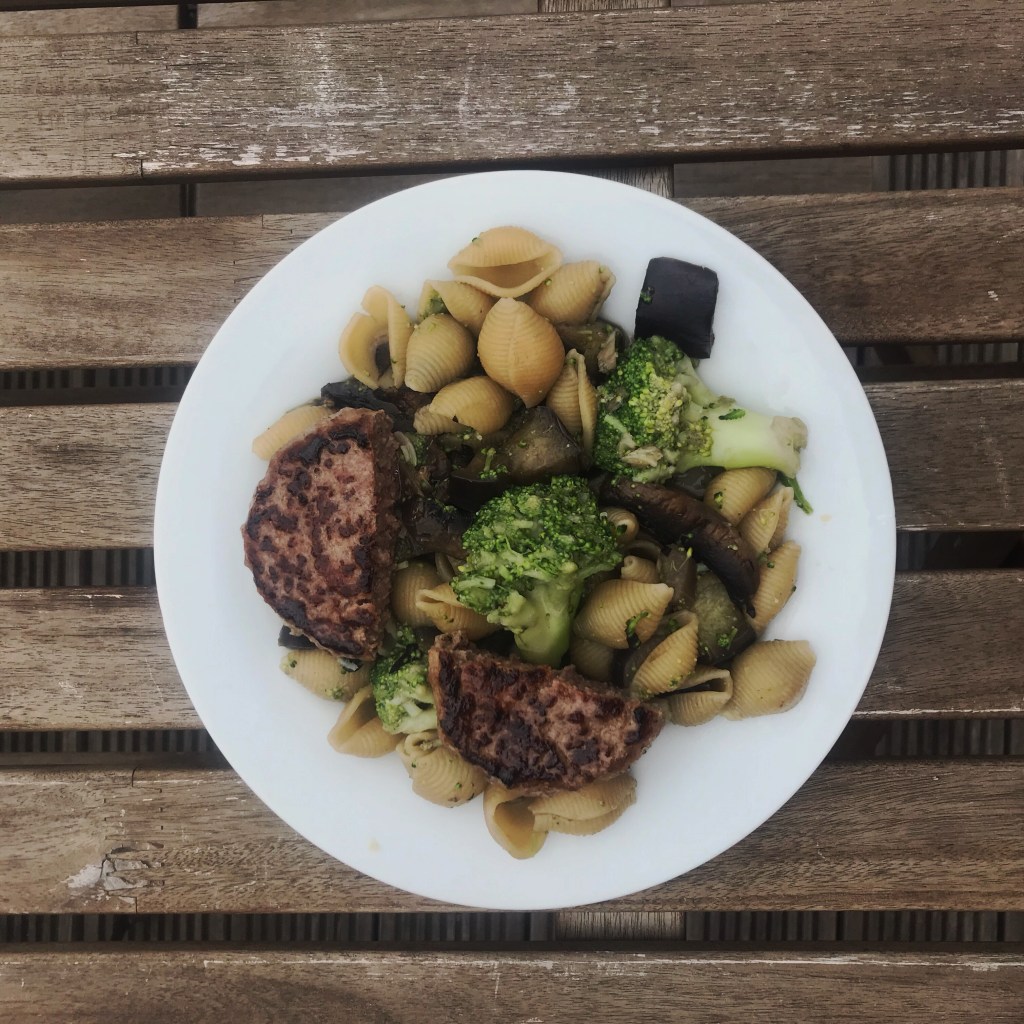
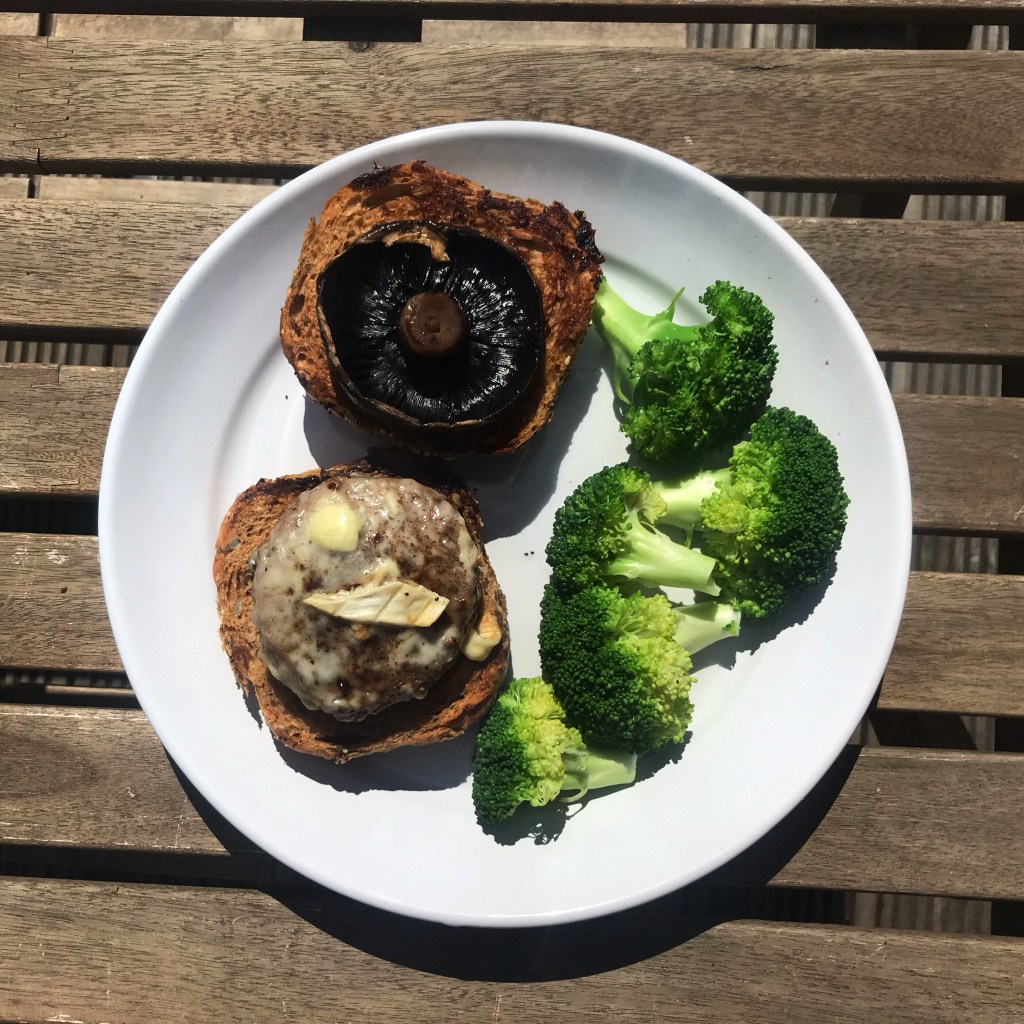
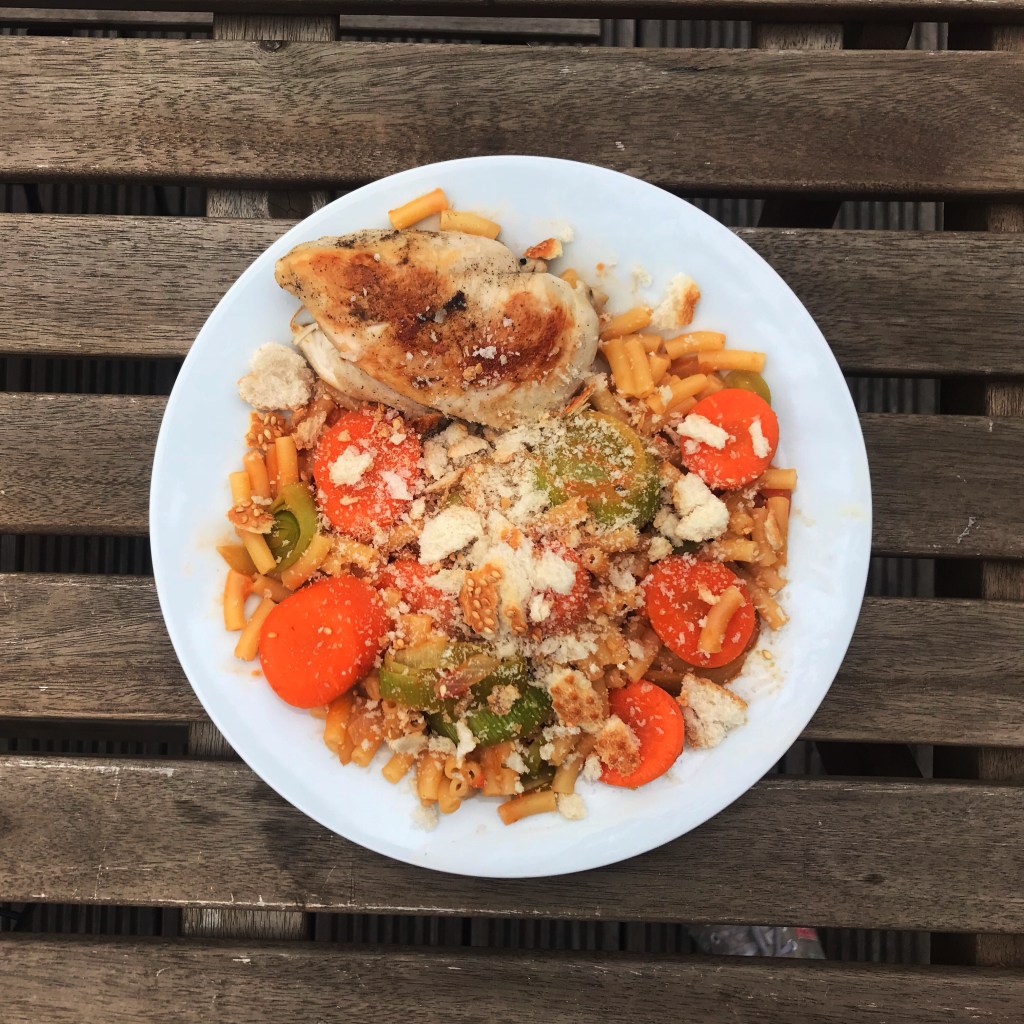
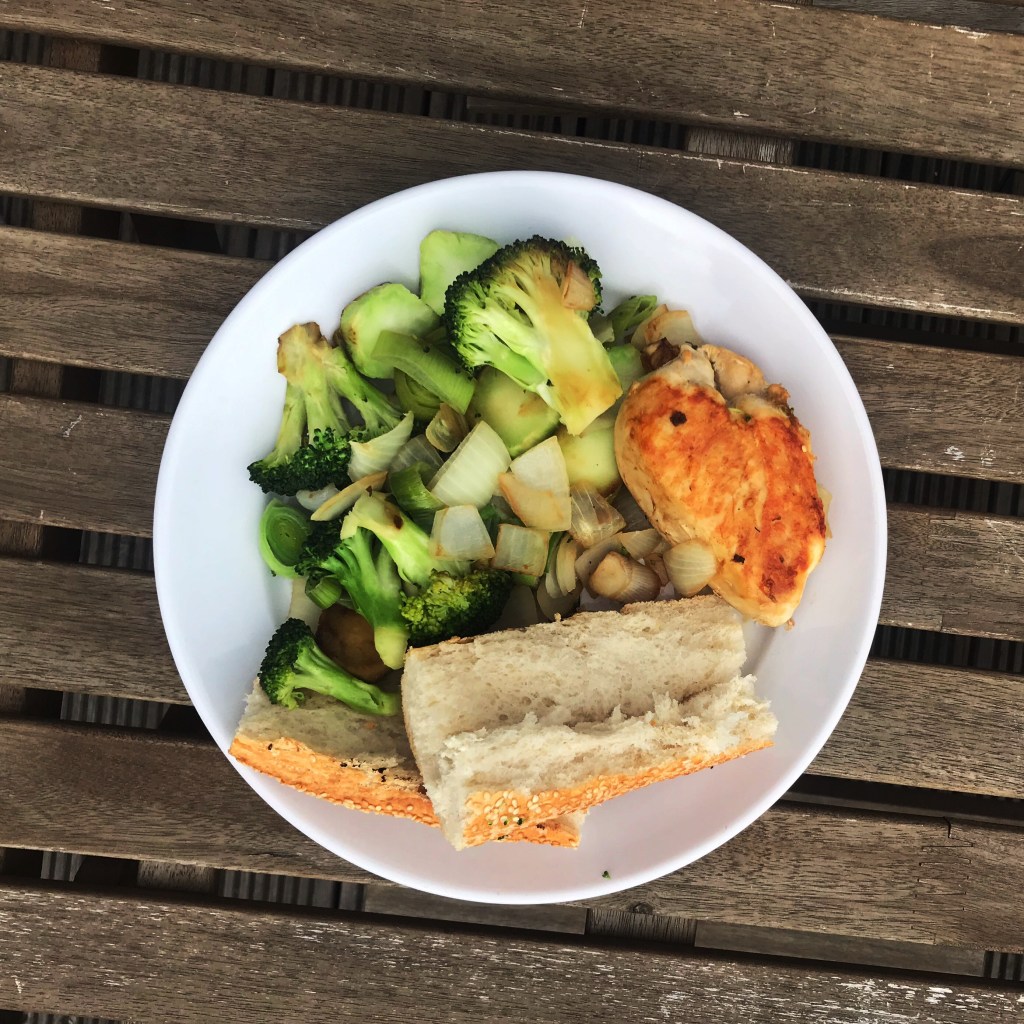
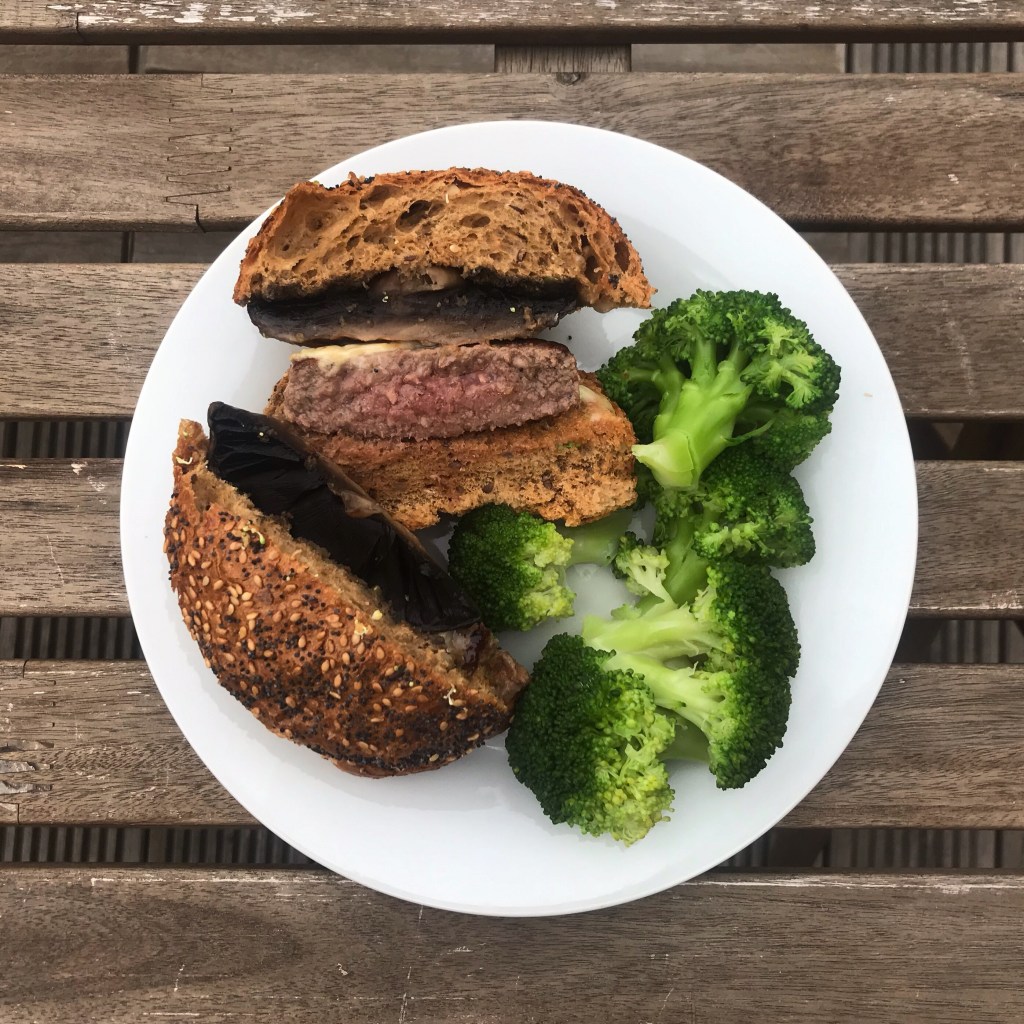
Throughout this semester, I learned to cook foods, which I ate on my patio:

I’m going to miss my patio. The patio in which I drank tea and ate food and conversed with my roommate. I’m going to miss the other patios in my life, those aspects of my lifestyle that will no longer be a part of my lifestyle given a transition in environment. In one week, I will no longer have a patio. Gone is the space where tea and food and conversations thrive. Gone is the view over the London suburbs with children playing hide-and-seek below. Gone are the days where I could hear the boisterous laughter of a gaggle of chads in the adjacent patio drinking beer in business casual.

This is my patio. My beautiful patio. It is a patio that I have rented through my tenure at 489 Finchley Road, but it is my patio. It is the patio that I made an absurd pact to eat one Sainsbury’s digestives on the 17th of each month for the next year. It was the stupidest agreement that I had ever made in my life, where I assume responsibility in the absence of incentive. I claim ownership over this patio in my head. It belongs to others, but it also belongs to me, and as long as I continue to give it existence in my head, it will continue to be my patio.

But, sooner or later, I will no longer be able to give it the thought it deserves any longer. It would no longer be a patio, and I will no longer claim ownership over this patio. It would return to the space where it had been in the past, an unoccupied part of the world that has one less individual hwo has laid claim to it. My patio, oh my patio! I’m going to miss my patio. How many other patios have I forgotten in my life. This patio. This other patio. That patio. I lose patios. I gain patios. Somewhere along the line, the patio will lose meaning in my life.

Is that just life? One patio to the next patio to the next patio?

sasha sloan @ dingwalls

this song is about reframing past love experiences

I have often compared concerts to religious experiences. This was not an exception. Sasha Sloan is my goddess. But, it was weird. It was weird in the sense that this is the first concert that I have paid for in over 6 months, and it feels weird that so much of my life has changed in these past six months. #abroad #changed #me

For one, I have upped my standards for what is considered to be a concert worth paying for. Gone are the days that I got to EDM concerts because I no longer see the value of paying for a couple hours of a guy playing his music on loud speakers with an occasional ad lib to fill the builds. Gone are the days that I would pay more than $20 for a concert because I no longer believe that the price of a concert is associated with the quality of the music nor that concerts ever should be priced in a way that is unaccessible to people who want it the most. It was a different time.

this is about understanding childhood trauma

Sasha Sloan is one of those artists that I listen to a lot. According to the last time I had checked last.fm, she was my second most-played artist this year. She only has two EPs out and a couple singles that she released with some DJs, so she doesn’t have that much material (at least, in relationship with the other artists I listen to). Since I had listened to her almost every day during my fall semester this, she holds a special place in my memories for being associated with the happiest semester of my life. I have also inadvertently memorized the choruses for all of her songs, and I do mean all 15 (?) of her songs.

I use to fantasize with my friends about the possibility of having the superpower to know every lyric to every song. It would make every concert or house party or Bar Mitzvah so much more entertaining. But, being the person that I am, I find it incredibly hard to memorize lyrics. I know some people who can just pick up a song after a couple of listens, but this had never been me. But, at this concert, this was the first time that I was able to experience this fantasy of mine, and I could honestly say that it was the most immersed I have ever been in a concert experience. And, as I yelled out the lyrics to all of these sad songs, I felt disassociated.

this song is about trying to feel normal

She has cool tattoos, and to a very large extent, I also want to embody that image that she gives off. I also wrote an essay about this recently — the aestheticization of melancholy. As an artist, she can only exist to me in an image, at least, until I become friends with her, but since that’s not happening anytime soon (or ever, if we’re anywhere except my version of the experience machine), I can only operate off the image that I have constructed around her, and her image is one of the relationship between sadness and love, which (surprise!) is something that I think about a lot on a regular basis.

I recorded a couple of her live performances, and I’m going to keep them on my phone for a while. It is one of those few instances when I take a picture that I actually know that I will look back on those pictures at a later date. This was a memory. This was a memory worth remembering, and I will continuously remember this memory because it is a reminder of other memories that I consider to be happy memories, and what is life but a constant yearning for those happy memories that are long past?

this song is about always running away

the afternoon after portfolio submission

This morning, I walked over to the English department office and submitted the three essays, each composed of 4,000 words, that I have been working on for the past month. My roommate had told me that writing these essays have made me insane. To some extent, I agree. Before this term, I had not ever written an essay on literature before the 20th century. I simply never had a taste for the English canon of literature. But, by the end of this term, I had amassed over 24,000 words (~75 pages) dedicated to everything from the Elizabethan Era, the Eighteenth Century, and the Victorian Period. I cannot talk about anything other than literature anymore.

I walked out of my English department building weary. Although I have gotten a good sleep throughout this entire semester, all I wanted was to escape literature for just a moment. No more mentions of Romeo and Juliet or Jane Eyre or Elegy Written on a Country Churchyard. It did not help that I had a scare about failing three English classes that semester because I had lost my marked tutorial essays. I’ll write about how that affected my understanding of determinism some day. I dropped my portfolio into a folder, I walked out, I walked around the corner to pick up a bowl of barley soup from the Hare Krishna stand, and I sat in silence, thus ending my studies in English literature at UCL.

The first stop I made was Curry’s PC World. It has been my first stop after every essay that I had submitted this term. I played around two hours of Starcraft II, and then I realized that I no longer enjoy playing Starcraft II. Then, I decided that I no longer want to play Starcraft II at Curry’s PC World any longer. Although I am a foreigner here in the UK, for some reason, I never felt the need previously to go to tourist sites. I derived more fulfillment from simple pleasures such as playing Starcraft at Curry’s PC World or eating Wasabi after 8 p.m. But, it dawned on me that I have less than a month left in the UK. Now, I am in tourist mode again.

After my realization , I took the Victoria Line down to Pimlico, where I walked into the Tate Britain. There were a couple of paintings that I recognized such as Ellen Terry as Lady Macbeth by John Singer Sargent, mainly because it is the cover photo of The Cambridge Companion to Shakespeare. I found the incident humorous. I felt oddly pretentious for being able to articulate the context of the painting from reading Shakespeare’s Macbeth without researching the painting beforehand, but at the same time, I also felt prideful that my education this semester had amounted to some sort of real world application, such as understanding the context behind a single painting at the art museum. I still don’t know what to think of the situation.

There was also an exhibit on Don McCullin’s photography. It was as paid exhibit, but I accidentally wandered into when I entered a door that turned out to be the exit of the exhibit. I’m not sure how I feel about that either. As a photojournalist, McCullin captures people during states of humanitarian crisis. He also had some philosophies regarding the motivations to photograph, which goes something along the lines of: if you feel something, take a photo, and if you don’t feel something, then don’t take a photo. His photos were quite inspirational, and although the subject of his photography is quite distant from my life, his exhibit did inspire me to document my intense feelings throughout my own life more, especially those within my relationships to others.

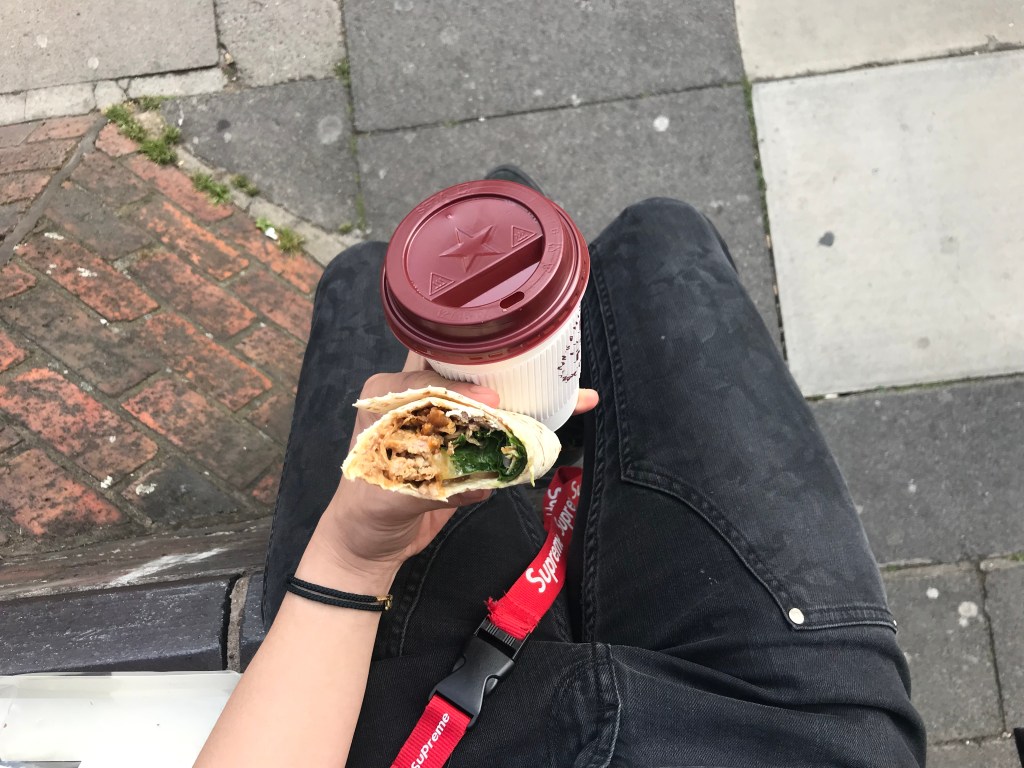
After I left the museum, I stopped by a Pret a Manger to pick up a coffee and a duck with hoisin sauce wrap. The simple filtered coffee that I order from Pret always amazes me at how they could pack so much warmness into such a nimble sip. Every sip of coffee from Pret always throws me back to the time I drank Pret coffee for the first time at the Pret inside Huntsman Hall. Compared to the alternatives on campus such as Starbucks, which I have always considered to be more ashy and acrid, Pret had always captivated me with its mellow and glowing tones, and I am so grateful for the abundance of Pret in London. Warm, warm everywhere!

I started along A3214 and wandered upon Westminster Abbey and Buckingham Palace. There were a lot of tourists there. I didn’t think too much of it. It is another big church, with a lot of gold inside. At this point, I don’t think I can be impressed by churches anymore. If anything, the more big churches I see, the more disillusioned I become religious institutions as a whole. If the creation of these churches in a religion that supposedly values humility isn’t an abuse of power, then what is? As for Buckingham Palace, it is a palace that houses people, I suppose. I really like the park that is next to it though. There was a fountain that played with my sense of balance. It was really cool.

I ended my excursions at the Waterstones at Piccadilly Circus, which is one of the biggest bookstores in Europe at six stories tall. As always, I searched for the philosophy section as soon as possible, which had been located on the fourth floor. After I briefly scanned the selection, I picked up Conditions of Love: The Philosophy of Intimacy by John Armstrong. I read a couple of chapters before setting the book down. I learned about the applications of Wittgensteinian linguistics in defining love, among other things. He had some hot takes. His writing is accessible and insightful. I will probably finish the book after I make another trip to Waterstones some day.

I returned to my house a bit after the sun had set. Now, I am tired once again. I want to write another essay on literature. Sad!

good question, billie, where do we go?

A review of Billie Eilish’s debut album, WHEN WE ALL FALL ASLEEP, WHERE DO WE GO?

I really don’t know. Where do we go?

Her album starts with the proclamation that she is taking out her Invisalign, preceded by some intimate slurps of some liquid followed by some greasy cackles into the distance. Although with ironic intentions, her introduction reminds her listeners that she is still at the age that involves wearing Invisalign, namely 17, and that her music is also a testament to the daring and creative energies of her age. I can barely remember what I had been doing when I was 17, and I can definitely say that it was not produce my first full-length album.

Her plunge into fame had been quite early. At the age of 14, she released “Ocean Eyes” onto Soundcloud, attracting an early fame that eventually signed her to Interscope Records. Because of her family’s connections with the music industry, she has often been labeled as an ‘industry plant’. But, similar to our diets, we do not necessarily need to be vegetarian to appreciate good vegetarian foods. Plants, if cooked well, are edible by everyone regardless of its place of origin. So why does being affiliated with the music industry detract from our perception of her music?

When I looked at all the production credits, I was pleased to find that all of her tracks have been written by her and her brother. There was not a list of other random individuals that have been credited because it seems that she had had incredible autonomy when creating the album, and I respect her creative talent regardless of her affiliation with the music industry.

I thoroughly enjoyed the three singles that were released before. I cannot recall how many times I have put on “you should see me in a crown” while stir-frying for dinner or “when the party’s over” when I took a particularly angsty shower. But, of course, “bury a friend” struck a very relocatable chord in my heart, as it is a metaphorical account of ending a friendship with the literal story of burying a friend in a park. Even its paranoid introduction captures the distrust beginning new friendships. Burying friends, after all, can have elements of trauma at times.

The music video that got released with the track was “bad guy,” which peaked at no. 1 on Spotify for a bit after its release. It’s quite a funny song detailing Billie’s assertion of being a “bad guy” with lyrics saying that she is a “might seduce your dad type” and “make your girlfriend mad type.” But, of course, Billie comparing herself to the “chest always so puffed guy” is quite a humorous image. Her soft-spoken voice contrasted with the upbeat and bratty nature of the nature the song accents the more child-like vibes of Billie. Perhaps one of the more happier songs in the album, I found the track to quite a startling introduction to the album.

You said she’s scared of me?
I mean, I don’t see what she sees
But maybe it’s ’cause I’m wearing your cologne

Billie Eilish, “bad guy”

Perhaps my favorite track of the album is “ilomilo”. The title is a reference to a game that Billie had played about two creatures finding their way back to each other. The song, similarly, is an account of the sentiment that follows the fallout from a friendship, particularly the search of finding a way to be back together. But I had always found the mid-tempo track to be hauntingly beautiful because of the bouncy keys in the background. Perfectly capturing the sensation of being lost after experiencing loneliness, “ilomilo” captures the universal heart.

The world’s a little blurry
Or maybe it’s my eyes
The friends I’ve had to bury
They keep me up at night
Said I couldn’t love someone
‘Cause I might break
If you’re gonna die, not by mistake

Billie Eilish, “ilomilo”

Another one of my favorite tracks is “i love you”, which captures the sensation of being told the phrase “I love you” without the committed intentionality behind it. The track is introduced with some soft guitar strums followed be an airy orchestra ambiance. As the final track of the album right before “goodbye”, “i love you” is a melancholic ballad to serve as the concluding tone of the album, and Billie indicates that the truth that she has come through all of her experiences is one of disillusionment, especially with love.

Maybe won’t you take it back
Say you were tryna make me laugh
And nothing has to change today
You didn’t mean to say “I love you”

Billie Eilish, “i love you”

Throughout the album, the intimate tone of her voice sharply contrasts with the otherwise dark atmosphere that is created through tracks such as “listen before i go” and “xanny”. Although her album started with two upbeat songs, the songs becomes progressively slower and darker as the album goes on, ending with the elegy-like “goodbye” to end the album. From contemplating about her death on the roof to watching her friends being intoxicated on Xanax, Billie captures the disillusionment within her friendships and relationships that follows growing up.

on those mellow mornings i sit down and weep

I appreciate the quiet in the morning. Far from a call for productivity, I sit in the quiet on my plush sofa and observe the dim yellow hue emanating from my window. I sit in silence, helping myself to a cup of coffee whenever I make the choice to continue living. I sit in my stupefied, groggy state and silently study my immediate surroundings. I try not to reflect on my life.

Those times pass slowly, not that I have an objective conception of time. But relative to the countless moments I have experienced throughout my life, it is a relatively long moment. While moments of joy, to me, are interlaced with an inherent fleetingness, my mornings have a sense of permanence to them that brings me to appreciate the opportunity to experience vulnerability once again.

I will experience these mornings from now until the end of my life. Each subsequent morning I experience brings me one morning closer to the termination of my existence. Each morning I experience could be my last. But, in the face of my conception of the value of my life, I am oddly complacent with the possibility of death. I would rather succumb to the limitations of my body than deprive myself of as universal of a beauty as those mellow mornings.

Because I will never be content with my life. To me, there mere definition of living implies a resting state of discontent. Feelings of contentment could only gravitate back towards discontentment given enough time to return to their grounded state. Any accomplishment or distraction to alleviate feelings of discontentment would only bring so much satisfaction. It would be hard to say that life has become more content as I have aged. And, as those feelings become less strong, other negative feelings of inadequacy or loneliness become amplified in the stillness. Soon enough, the cycle to satisfy a state of discontentment returns.

But, in those mellow mornings, I exist in a state of stasis. Although the rest of the universe is continuing to pass by, I certainly do not feel the effects of time slowly passing at one second per second. I just sit and observe the my emotions pass through me. For as many luxuries that I have been afforded throughout my life, it seems that watching the faint, golden sun rays in my living room is one of the most universal experiences I could experience, at least one of the few experiences that seem the most real to me.

It is in these moments I lose my conception of time. I lose my understanding of the temporal context of my existence, instead temporarily transitioning myself into an immortal being until, of course, I regain my sense of time again. Because I can only conceive of a universe that is constructed from my categorization of stimuli, I, too, can only understand the nature of time relative to my self. When time passes slowly for me, I can only envision that the time would pass slowly for others as well. After all, ten minutes in the morning feels so much longer than ten minutes at night.

The act of waking is equivalent to fading back into existence. Sleep is but a temporary death, and waking serves as a transition into reanimation. Similar to what I would imagine individuals to experience after a metaphorical death, there exists a transition period once we wake up where we are neither dead nor alive. We exist rather instinctually, allowing the impulses of our bodies to guide us through the morning. From brushing our teeth the making coffee in the morning, I wonder if we are that different from high-functioning zombies.

Because I have not actualized the full extent of my body in the mornings, I am at the mercy of a series of compulsive thoughts that are normally repressed by my psychological defense mechanisms. Ideas and events that I have sublimed or deflected throughout the day return to haunt me in the morning. Every broken friendship or missed opportunity circles around my mind, ready to pounce whenever I do not have the state of composure to fight it off. And in those moments, when my mind has not full reanimated from the dead, I am at the mercy of those thoughts.

Even in terms of writing, I have a sense of expectations that are a constantly met whenever I wake up and return to those mellow mornings. When I had first started to think about mellow mornings a couple of months ago, I had been consistently listening to “Venice Bitch” by Lana Del Rey whenever I would boil the water to be poured into my oatmeal for the day. A few months later, I still am pouring the same boiling water into the same oatmeal, just a couple hundred miles away from where I had been previously. Even though the circumstances of my environment had changed, I still hold those mellow mornings to the same certainty.

Sometimes, during the day, I would genuinely forget about how sad I am. Sometimes, experiences throughout my day would convince me that my life had not been as melancholic as I had imagined it to be. I would call into question my memories, hoping that I had misconstructed the narrative that had defined my life, whatever that would mean. But, as we have learned from Lana Del Rey’s newest single, “hope is a dangerous thing for a woman like me”. Hope, unlike sadness, is ephemeral, and why would I ever attach myself to something I know to be impermanent? It is in those moments that I am reminded how temporary happiness is — how happiness merely exists as the suppression of sadness.

When I wake up in the morning, I am reminded of the sadness that permeates the foundations of my existence. The noise that has distracted me from my true nature — the conversations, the deadlines, the music — no longer have power to divert my attention away from my sadness. I would open my eyes in the morning to the sight of the faint blue and remember all that I had willed myself to forget. Sometimes, the birds would chirp in the leafless tree next to my apartment. Sometimes, cars would pass by leaving only the stick sounds of their tires on the wet pavement behind. Nevertheless, I sit still with my silence.

I would lay in my comforters with my eyes open. In those moments, I feel the most lucid. I feel the most in touch with the states of being that have come to define the majority of my existence. My sadness is unadulterated by a reason; it simply exists along with other metaphysical causes of my existence. It is in those moments that I remain true to the sentiment that I do not need a reason to experience sadness. If existence precedes essence, then certainly sadness would come along with existence. Similar to how I cannot image having an essence without existence, I also cannot imagine having an essence without sadness.

I am lonely. I am so lonely, and it is in those mellow mornings I feel the fullest extent of my loneliness, I use the material comforts in my life to mitigate my feelings of loneliness, but I will continue to be lonely for the rest of my life. It is in those mornings that I remember that I have been rejected by the world, and that every instance of my continued living is a rebellion against the rightful equilibrium of the universe. I am loved by some people in my life, I am sure, but I cannot feel love anymore. It seems that no matter how hard I try to allow myself to feel the warmth through others, I am always just left with feelings of alienation.

When did my affinity for mornings arise? I remember it had been mere years ago I had identified with being a night person. Or, perhaps, I had always been a morning person thought I did not realize it. I would like to think, however, that the appeal of mornings arose with my realizations of the sadness that infest every corner of my mind. It was only until I realized that the sadness had been existent when I found mornings and their consolidating properties to give me life.

Sometimes, like Lana Del Rey says, I also have a lust for life. Perhaps that would take form through sexual and romantic desire, but I wonder if that is the end of it. All those girls with whom I have had a sexual or romantic past seem to be doing well, and I am happy for them for living a life that is more joyful than mine. Or, is that something I tell myself to hide the bitterness I have for my own condition? It is hard to know these days. There exists the raw state of all my feelings and desire that I experience in the mornings, and then there is the sublimated versions of those same desires that I experience in my life. As I continue to age, it becomes harder to differentiate the two.

I am sorry to myself. I am sorry to the universe. I don’t even know what I am sorry for. I just know that I am sorry, and it in those mornings that I can feel how sorry I am for just existing. I am sorry. I am so, so sorry.

half six fix @ the barbican

I began to lose consciousness after stuffing myself with as much vegan curry over rice as my stomach could possibly handle at Indian Veg. I ended on a gulp of cold water even in the face of questionable advice signs such as “cold water causes heart disease.” But, as if my cold water didn’t increase my chances of heart disease enough, I walked over to a Pret near Angel station to wash down my incoming food coma with a cup of coffee.

I arrived at the Barbican Centre from Barbican station, which had been the same entrance I took when I had visited the Barbican for the first time the previous week. The architecture still inspired me upon second glance. Although I do not know much about the history of location, the area seemed to be reminiscent of a socialist utopia. The fact that such a luxurious neighborhood had been public housing at one point amazes me even more. During the day, the interior is littered with people drinking glasses of wine or reading a book. It was one of those places. A large fountain had been surrounded on all sides by brown concrete buildings with ivies dripping down them. In the middle of the water, a dozen pillars supported a similarly sized concrete block, which housed even more residents. In the distance, a couple of the high rises made from the same brown concrete lined the edges of the area before transitioning to the rest of the city.

The London Symphony Orchestra were playing two songs: Strauss’ Till Eulenspiegel and Shostakovich’s Symphony No. 1. I have played both of these pieces before in some capacity. There, watching the flailing arms of the conductor, I found myself reminiscing the countless rehearsals that have defined my own experience with these pieces.

I played Till Eulenspiegel in either the Philadelphia Sinfonia or the Philadelphia Youth Orchestra. I do not remember which one, as most of my experiences playing violin during my adolescence have merged into one negative sentiment. But, as I heard the countless flute solos throughout, I couldn’t help but to flutes on the countless times my conductor has yelled at the flutes for rushing. Or, the basses. The bassists in almost all of orchestras had been a subject of ridicule by the conductor. I suppose, of course, that rehearsals ran a bit differently in professional orchestras as opposed high school students playing instruments. I would assume that all of them could count. But, alas, whenever I hear a section solo, I could only imagine the conductor shouting and clapping during rehearsal.

I have never played Shostakovitch No. 1 in an orchestra context, but I believe that I did played an excerpt of the first movement for an audition at one point. Seeing that I did not have the chance to play it in its entirely, I could only assume that I did not get into whatever I had been trying to audition for. I do, however, remember that playing the majority of the theme in seventh position, and I remember how painful it had been to repeated practice a couple of measures with my nimble fingers against the biting sharpness of the E-string. I could only imagine how much time each of these musicians have spent on the same indifferent strings. I envision the melody matching the screams of their fingers.

I did not pass out as I think I would. I have not passed out at a concert since I had been in elementary school. I thought I would pass out, but I did not pass out.

afternoon reading @ waterstones

On the corner of UCL’s campus, there is a Waterstones on Gower Street. I would come to this Waterstones every Friday, as it would be the place where I would part with my friend after eating some of the free food generously provided by Hare Krishna nearby. Because the food would be mostly potatoes and barely, I would need a shot of espresso to get through the rest of my evening. Conveniently, Waterstones was right next to the intersection where we would part ways for our afternoons, and I would come inside to have my coffee.

Today, I came Waterstones to find The Agony of Eros by Byung-Chul Han, per suggestion by a professor with whom I will be doing an independent study next semester. After finding out that the store does not have the book in stock, I decided to spend the rest of my day in the store doing some light reading before I had to find my way back to the library and fill my backpack with the theory and history about Victorian conceptions of love and Jane Eyre by Charlotte Bronte. After wandering the philosophy section of the store for a bit, I picked up The Art of Travel by Alain de Botton.

I never really liked Alain de Botton’s writing because I think that many of his ideas are quite underdeveloped in his books, but I do like his writing style for his flamboyance that errs on the side of pretentiousness. Nevertheless, his ideas are one of the first ideas I have come across in love, especially violent love, and as a permanent resident of London, he has quite the status of a celebrity here. I probably won’t read his works when I return to the States, so I might as well read some more Alain de Botton while I still have the incentives to do so from the act of traveling.

I sat in a cozy protrusion to the outside where six windows surrounded a single table that was only marginally bigger than my desk in second grade. Outside, there is a man playing the bagpipes. I appreciated him for doing what he does, as I have often viewed street music as a means to make the everyday enjoyable. Today was no exception, so I sat down and worked my way through the book while occasionally checking my phone for some messages on Whatsapp and emails on Gmail. Occasionally, I would need to pee in the only bathroom in the store in the basement.

I have always appreciated bookstores for their ability to offer everything I want to read through a space that brought me comfort. I reflect on the times as a child when I would spend my entire afternoon at the Penn Bookstore reading books that I was never allowed to read at home. But, alas, there can only exist so many bookstores in the world because of people like me.

the impermanence of tattoos

People often say, “Tattoos are permanent.”

I disagree. Nothing is permanent.

But, this was only an attitude that I have come to have after the existential aspects of my life settled into my consciousness. It was a time when I had been more angsty as the person I am now and without the means to channel my angst in a productive manner. I, too, had the same reservations when getting my first tattoo, which was in the fall of my sophomore year of college. It was a particularly sad period of my life but before I had integrated absurdism within my intuition. And, being the socialized individual I am, I seriously applied such conceptions of permanence to my lifestyle choices such as getting tattoos.

But, then I came to understand the nature of my existence, and I no longer held the same conceptions of permanence. Sure, tattoos stay on my body forever, but what is my body but a temporary vessel for my essence? And, what are the implications of the separation between mind and body if they are both ephemeral? If the average life expectancy for an individual in the United States is around 80 years, which I would assume would also apply to me discounted for various other instrumental variables such as levels of education and socioeconomic status, and I get my tattoos in my twenties, then how does 60 years of my life qualify as ‘permanent’?

The ancient Greeks used to believe that the form we take on Earth would define the form we take in the afterlife. I’m not sure what Christianity has to say about astral projections in heaven, but from what I have seen in movies, it seems to take form of an ideal self. Therefore, if their religion turns out to be ‘right’, then I would truly spend the rest of my eternity with the tattoos that I have in the moment. I would wander the fields of Asphodel for the rest of time with my tattoos. Then, it would be truly permanent. But, seeing as I do not subscribe to any Hellenic religions, I do not have fear that my tattoos would be true to the definition of permanent. If I did, then I would have other aspects of my lifestyle to be concerned with.

I have this weird sensation after I get a tattoo. The feeling resembles regret, but regret would be an inaccurate assessment to my sentiment. I suppose it is one of longing for the skin that had existed untouched by the drilling tattoo needles. Because, despite my appreciation of the art, the skin that is untouched has the most potential to be beautiful, and once the skin is tattooed, it no longer has the infinite potential to be art in the same way that an empty patch of skin has. And so, I suppose what I am feeling is a sense of longing for the possibilities that have now been taken away.

I suppose, in a way, such a sentiment reflects the nature of my life. Despite being comforted by my sadness, there will always exist a part of me wishing I could return back to my childhood self and relive my life in another way. My formative years have much passed, similar to me covering my body in tattoos, and there is so little room to create in the same way that I once did. Similar to how there is no more room to tattoo certain areas of my body, I can no longer create further conceptions beyond what I already have. Those are the parts of me that have already been defined — one through tattoos and the other through experience.

A chunk of my latest tattoo did not heal properly. The darker areas became too dry and peeled off early, leaving a discolored patch of greenish black in an otherwise collection of dark lines. At first, I was distraught. Obviously, I was concerned with the appearance. But, after reflection, I realized that this would be the color the tattoo would take eventually. Of course, I could retouch the discoloring with another artist, but why would I? It is just a reminder of how finite my existence is, and I consider it to be a glimpse into the future. And, in the face of the passage of time, I no longer look upon it with fear, although it would be hard for me to say that I feared time at all. Easy come, easy go.

I have no idea how my tattoos would look like when I am reaching the end of my life. I suspect not well, but I will also be old and with wrinkles, and I will also be looking not well. I have the body to pull off tattoos right now. But, when my metabolism slows down later on, and I started to accumulate fat, I will no longer have the youthful stature to allow my tattoos to extenuate my youthfulness. I would just be a wrinkly old man. But, I would imagine, by then, that I would care even less about other people’s opinions than I do right now. I will be afflicted with loneliness as many old people are, and I would hope that I have larger problems to be concerned with than the opinions of others.

Then I will die. All traces of my body will eventually dissipate. All traces of my identity would evaporate. All traces of my existence will disappear, including all traces of my tattoos.

the econometric origins of emotional indifference

When I had been a child, I could only conceptualize emotions in one axis: love and hate. Somewhere along my education, I learned to conceptualize emotion through another axis: passion and indifference. Similar to the x and y-axis on a Cartesian coordinate, the two axes of emotion do not interact with each other, which is why I find any comparison between love and indifference to be inaccurate. If I apply an econometric lens to the nature of emotion, I hypothesize that the perceived correlations between the love axis and the indifference axis to be the result of a confounding variable with statistically significant correlations to both indifference and love, primarily arising from the bias the two axes of emotion are narrowly defined through an individual relationship with other individuals.

Such models that have defined my understanding of emotions thus far have not integrated an element that would account for an individual’s relationship with themselves, primarily through an existential lens. If I were temporarily to take a logical framework in attempting to define indifference, then I could articulate a distinction between relational indifference and existential indifference. The indifference that I show others is in no way similar to the indifference that the universe shows me. For one, I can perceive the indifference that I show others through its emotional effects that can be quantified through aggregate feeling defined within the unconscious of a relationship. I cannot even come close in perceiving the indifference of the universe.

Similar to the existence of a black hole, I cannot directly observe the effects of the absurd on my life. I cannot quantify the effects of the absurd in the same way I could project the growth of an economy in the absence of tangible shocks like wars and natural disasters, but I can infer its existence through tangential correlations within my relationships. In a sense, my interpretation of the absurd as truth is almost entirely dependent on faith. I can never prove the existence of the absurd in the same way I could prove trigonometric identities using a series of logical steps constructed from a library of a series of mathematical axioms. If I were to articulate the absurd as Camus did, then I would have to operate off of sentiments. And, as for now, his sentiment comes the closest to what I perceived as truth.

As with all statistical models, there exist trade-offs between bias and variance. Those are for models that can be quantified using numerical data. Because I can only speculate the existence of a model synthesizing emotions and absurdism in an econometric context without the possibility of assessing accuracy through training and testing data, I can only take it on faith that such a model would follow the same fundamental principles as other economic models, including the bias-variance trade-off. If the same rules apply to assess the accuracy of defining absurdism as generalizations about a population, the closer I come to defining the absurd through words, the further I come from an accurate definition of an intangible principle. On the other hand, the contradiction exists in the further away I stray from defining such a concept, the less I can articulate its existence within a constructed narrative of my own life.

I understand that the world is indifferent. I have known that the world is indifferent since I had been unconsensually thrown into existence at my inception, yet I would be lying if I were to say that I could fully conceptualize the extent of the indifference within the same time frame as my initial comprehension of universal alienation. Indifference exists in multiple spectrums beyond those associated with emotion. Indifference exists in such a form beyond the negation of feelings of love and hate. Indifference is not a state of neutrality in the same way that zero is an absence of magnitude. Indifference, similar to love, is a principle that can be loosely understood at a young age, but grows infinitely in complexity until its mere articulation does the word an injustice.

The world has always been indifferent to my existence; it is only as I age do I come to realize the full extent of the indifference.

Every year, I question myself: Am I approaching truth, or am I diverging from it? Is truth subject to the opinions of the masses? It certainly seems that I am edging further and further away from the lives of those individuals that define my daily interactions. My interactions with others become increasingly mundane; it often feels as if I have had such interactions thousands of times before, which I probably have if I could articulate the monotony of having the same conversations among different individuals. It is quite elitist of me to compartmentalize my conversations relative to my subjective evaluation of insight, but every year, it seems that I become increasingly dissatisfied with my previous life.

I take comfort in those authors who could articulate sentiments I supposed I created endogenously better than I could do myself, but do those authors represent truth? Their works, after all, merely offer an interpretation. But, unlike philosophy constructed around a logical framework, the existence of literature does not do justice to the word interpretation if such interpretations are universal. The artist creates a representation of the underpinning truth defining their lives within a contribution to humanity’s collective understanding of truth. The artistic construct can never accurately depict the infinite ineffability of a construct as abstract as truth, yet their attempt to do so symbolizes a movement along an asymptotic line approaching the value of infinity.

And so, even as my emotional connections devolve closer and closer towards indifference, I come closer to understand the unknown third variable that underlies all of my interactions: the realization of the absurd. But, of course, the correction of any faulty statistical model suffering from omitted variable bias is contingent on the identification of the omitted variable, and I come closer to addressing my indifference, if my indifference needs to be addressed at all. Through literature, I am coming closer to perceiving the omitted variable via the limit towards an discontinuity. And, with that note, I continue to live approaching a non-existent point.